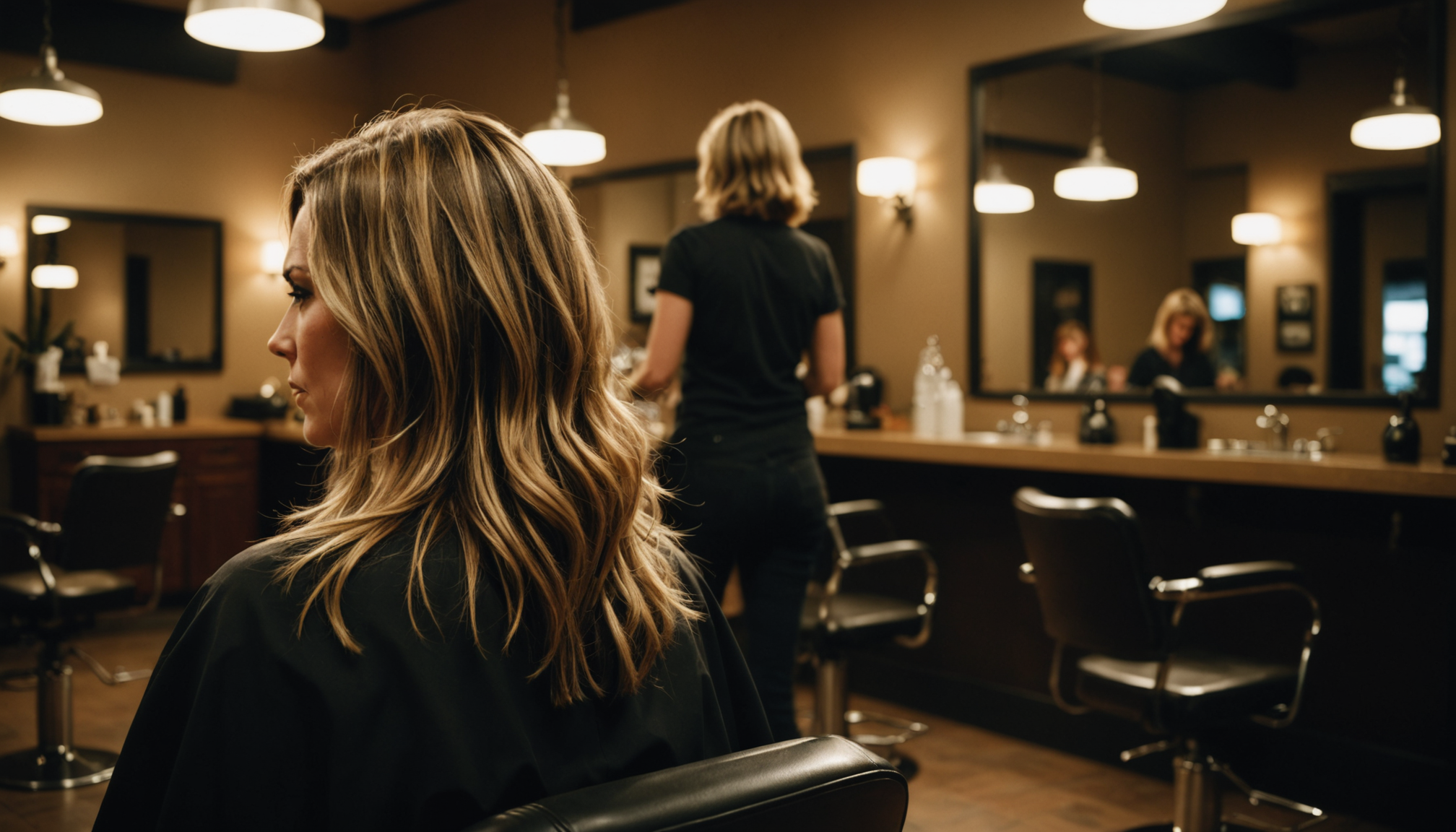
Cruelty-Free Hair Salon Scottsdale: What Salons Won't Tell You
Scottsdale has more salons per square mile than almost any city in Arizona — and nearly every one of them now calls itself "clean," "natural," or "cruelty-free." Those words stopped meaning much the moment marketing teams discovered them.
TL;DR
- "Cruelty-free" on a Scottsdale salon website can mean anything from fully certified ethical product lines to a single shelf of botanical shampoo sitting next to formaldehyde-based relaxers.
- There are five specific questions that separate genuine cruelty-free salons from salons running a clean-beauty brand story with conventional chemistry underneath.
- After reading this, you'll know exactly what to ask — and what the right answers sound like — before you book a color, keratin, or balayage appointment.
---
What Cruelty-Free Actually Means in a Cruelty-Free Hair Salon
Here is what the term does not mean: "we use nice-smelling products." Cruelty-free has a technical definition. A product is cruelty-free only when neither the final formula nor any of its individual ingredients was tested on animals — at any point in the supply chain, including third-party testing required by certain export markets (China, until its 2021 regulatory reform for ordinary cosmetics, mandated animal testing for imported salon brands). That reform only applied to ordinary cosmetics, not to specialty salon treatments, which means formaldehyde-free keratin and professional-grade color lines can still involve animal testing in some global supply chains in 2026.
The word "natural" is even slipperier. No U.S. regulatory body — not the FDA, not the FTC — has a legally binding definition for "natural" in cosmetics. A salon can label a product natural while it contains synthetic preservatives, petroleum-derived silicones, and sodium lauryl sulfate.
What should you look for instead? Third-party certification. The two most credible marks in the professional hair space are Leaping Bunny (run by Cruelty Free International) and PETA's Beauty Without Bunnies. A certified salon should be able to name the certifying body for every product line they use — not just gesture at a logo on a shelf.
At Luxe Hair Studio, every product line — from the toners used in balayage sessions to the bonding agents in hand-tied extension installs — carries Leaping Bunny or equivalent certification. That's not a brand story; it's a procurement standard.
---
Five Product Claims Scottsdale Salons Fake Regularly
Walk into almost any upscale Scottsdale salon and you'll see language like "plant-based," "sulfate-free," or "vegan." Here are the five claims that get stretched furthest — and what to look for behind each one.
1. "Vegan Formula"
Vegan means no animal-derived ingredients. It does not mean cruelty-free testing practices. A color line can be 100% plant-based and still be tested on animals for its export markets. Ask specifically: "Is this formula also Leaping Bunny certified, or just vegan?"
2. "Sulfate-Free"
A salon can remove sodium lauryl sulfate from a shampoo and replace it with other harsh surfactants — ammonium lauryl sulfate, for example — while marketing the result as gentle. Sulfate-free only matters if the replacement ingredient is genuinely milder and still ethically sourced.
3. "Formaldehyde-Free Keratin"
This one is critical if you're considering a keratin smoothing treatment. Many "formaldehyde-free" keratin products release formaldehyde gas when activated with a flat iron at high heat because they contain methylene glycol, which converts to formaldehyde above roughly 150°F. In 2026, OSHA still classifies methylene glycol keratin products as occupational hazards — yet some Scottsdale salons continue marketing them as clean. If you've already invested in a color service, protecting your balayage with the right keratin formula requires knowing the chemistry, not just trusting the label.
4. "Sustainably Sourced"
This phrase requires zero documentation to use. Genuinely sustainable sourcing usually involves a clear chain-of-custody certification (Rainforest Alliance, Fair Trade) for botanical ingredients like argan or marula oil. Ask for documentation. Silence is your answer.
5. "Ammonia-Free Color"
Ammonia-free color substitutes ethanolamine or other alkaline agents for ammonia. Those alternatives are not necessarily less damaging — and several synthetic alkaline agents in conventional color lines are still tested on animals. The term "ammonia-free" addresses fragrance and fume reduction, not cruelty-free status. The two are unrelated.
---
How a Cruelty-Free Hair Salon Handles Keratin and Color Differently
The formulation differences between conventional and genuinely ethical product lines are observable — if you know what to look for during a service.
Color timing is longer. Certified cruelty-free color lines that rely on plant-alkaline systems rather than synthetic accelerants typically require 10–15 minutes more processing time than conventional ammonia-based color. A salon rushing your color appointment to 25-minute processing on a full head of color correction is almost certainly not using a certified ethical line.
The salon smells different. A genuine cruelty-free color environment has minimal chemical odor. If you're sitting under processing color that produces a sharp ammonia tang, the formula in your hair is not clean. This matters not just for ethics — ammonia penetrates the cortex more aggressively, which is one reason color correction appointments in Scottsdale are expensive: the structural damage from repeated conventional color services accumulates and has to be addressed.
Product labels are visible and nameable. In a genuinely cruelty-free salon, your stylist should be able to name the brand and certification of every product touching your hair without leaving to check. In 2026, the professional lines consistently meeting Leaping Bunny standards include Aveda, Kevin Murphy, and Oway. A stylist who can't name the brand they're applying is using products the salon hasn't vetted — or doesn't want you to examine.
Keratin chemistry is disclosed upfront. At Luxe Hair Studio, every keratin smoothing treatment consultation includes a written ingredient review. A salon that won't hand you an ingredient list before a chemical service has told you everything you need to know.
---
The Exact Questions to Ask Before You Book at Any Scottsdale Salon
After all of the above, here are the five specific questions to ask — either by phone before booking or during your consultation.
1. "Which certifying body certifies your color line as cruelty-free — Leaping Bunny or PETA's Beauty Without Bunnies?" The right answer names one. "We use natural products" is not an answer.
2. "Does your keratin treatment contain methylene glycol or glyoxylic acid?" Both release formaldehyde under heat. A knowledgeable stylist will answer immediately. Hesitation means they don't know — and that's your answer.
3. "Are 100% of your product lines certified, or only some services?" Many salons use clean lines for retail but conventional lines for color services where the chemistry is harder to substitute. Ask specifically about color, keratin, and extension bonding adhesives.
4. "Can I see the product labels or the brand certification page before my appointment?" Any ethical salon will say yes without hesitation.
5. "Do you offer a complimentary consultation before color services?" This one isn't directly about cruelty-free, but it's a calibration question. A salon that offers free pre-color consultations is demonstrating that they slow down and communicate before applying chemistry to your hair. That same discipline is exactly what cruelty-free product stewardship requires. Incidentally, evaluating a stylist's credentials during that consultation tells you as much as the product labels — trained colorists understand formulation because their education required it.
---
Why Sustainable Products Protect Your Hair Investment Long-Term
This is the part most Scottsdale salons skip because it requires them to talk about chemistry honestly. Cruelty-free and sustainable professional lines outperform conventional chemistry on one measurable metric that matters for every client: cuticle integrity over repeated services.
Here's the mechanism. Conventional ammonia-based color forces the hair cuticle open aggressively and leaves it partially swollen after the service. Repeated over eight to twelve months, this degrades the cuticle layer to the point where color fades faster, frizz increases, and the hair's ability to retain moisture drops significantly. The result is a client spending more per year on color correction and treatment services to compensate.
Plant-alkaline and certified clean color systems work at a gentler pH — typically 8.5 to 9.5 versus the 10–11 range of many ammonia-based lines. At that lower pH, the cuticle opens sufficiently for color deposit but returns closer to its natural flat position after rinsing. Over a 12-month cycle of four to six balayage or color appointments, clients using clean product lines consistently report — and colorists observe — less breakage, better tone retention, and longer intervals between services. Making your balayage last four to six months is largely a product-chemistry question — and sustainable lines give you a structural advantage that conventional chemistry simply doesn't.
For bridal clients: this also matters on a deadline. Healthy cuticle integrity means styling holds better, heat damage is less likely during the appointment, and the color looks dimensional rather than flat in photographs. If you're vetting stylists for your wedding, the product lines they use day-to-day on their clients' hair will show you more than their portfolio — ask about it during your bridal hair trial questions.
A sustainably run salon also extends the life of your investment in a second way: consistent formulation standards mean no unpleasant surprises when a product line gets "updated." At Luxe Hair Studio, any product substitution goes through a review process before it reaches a client's hair. That's not standard practice in Scottsdale — it should be.
---
Book a complimentary color consultation at Luxe Hair Studio — call or message us through /contact and ask specifically about our certified cruelty-free product lines. Bring your five questions. We'll answer every one before we pick up a brush.