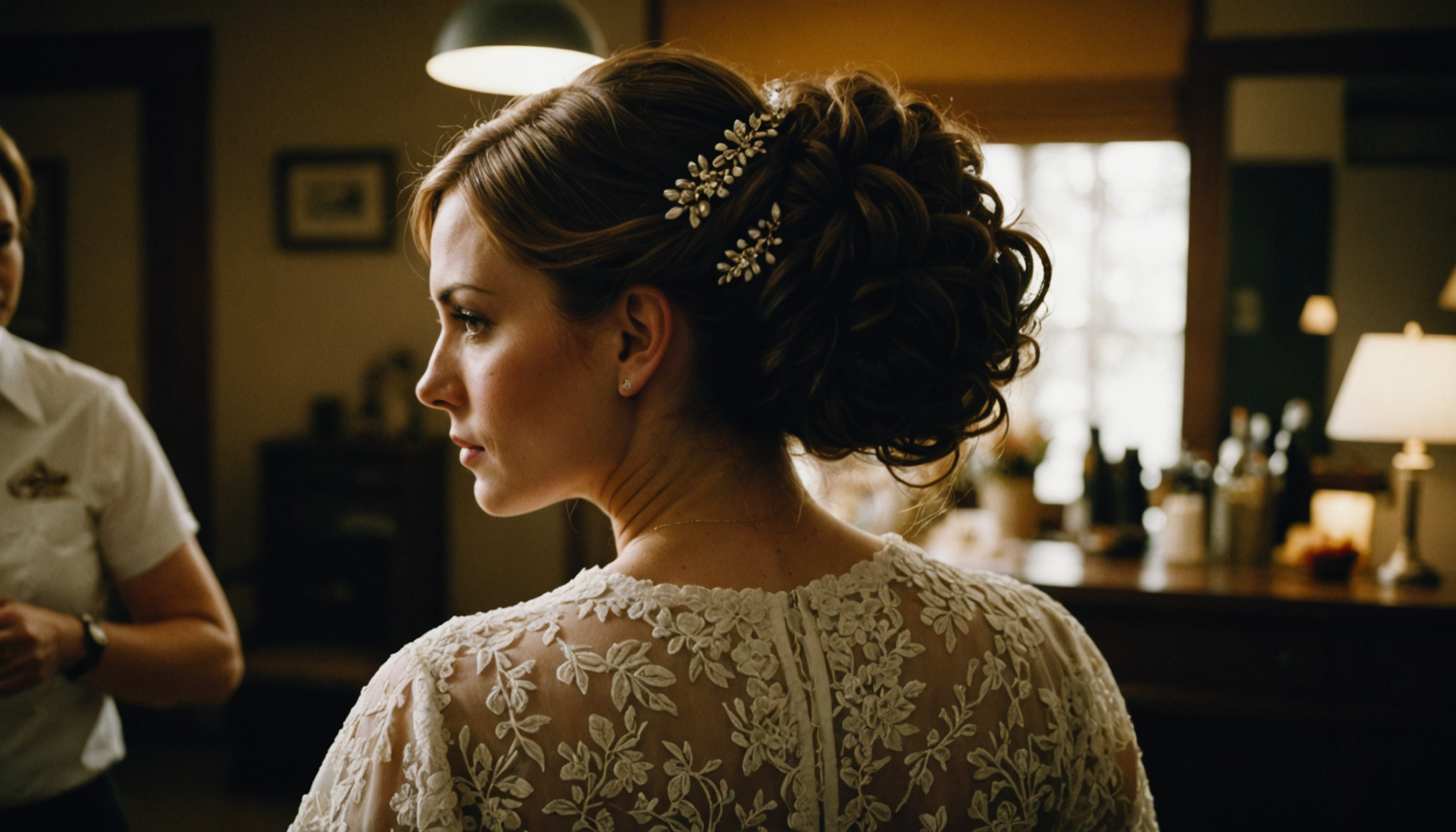
Bridal Hair Stylist Scottsdale: 5 Questions to Ask at Your Trial
Brides who book based on Instagram alone are gambling with a 14-hour Arizona wedding day — and most don't realize it until flyaways hit at hour four.
TL;DR
- A portfolio shows what a stylist can do at 9am in a climate-controlled studio; your trial reveals what that style does by 10pm in 110°F desert heat.
- Most bridal hair failures in Scottsdale trace back to three things: wrong product layering, no humidity plan, and a timeline that was never stress-tested.
- Use the five-question checklist in this post at every trial — it separates stylists who produce beautiful photos from stylists who produce a beautiful wedding day.
---
Why Portfolio Photos Lie About Bridal Hair Quality
A stunning portfolio is table stakes, not a guarantee. What Instagram doesn't show you: the photo was almost certainly taken within 90 minutes of styling, in a 72°F salon, with a ring light doing half the heavy lifting. That has nothing to do with how your hair behaves at an outdoor Scottsdale ceremony in June, when the temperature hits 108°F and your outdoor portraits run 45 minutes long.
Here's what portfolios routinely omit:
- The hold duration. Was that updo still intact at hour eight, or did the photographer wrap at noon?
- The product stack. Did the stylist use a flexible hold that breathes in heat, or did they shellac the style in place for the shoot?
- The revision history. A flawless final photo can represent three invisible restyles in the chair before the shutter clicked.
The single most useful thing you can ask when reviewing any bridal portfolio in 2026: "Can I see reception-end-of-night photos from this wedding, not just the first-look shots?" Stylists who regularly shoot Arizona weddings will have these. Stylists banking on one golden-hour reel may not.
Understanding where a stylist trained matters here too. Why stylist credentials outweigh years of experience is worth reading before you start shortlisting — Vidal Sassoon and Aveda training programs specifically drill structural technique, which is what keeps an updo intact through a long reception.
---
What a Bridal Hair Stylist Scottsdale Trial Should Actually Test
Your trial is not a preview of your wedding hair. It's a stress test. Most brides walk out of a trial thinking "I loved how it looked" — the right question is "how does it look three hours from now, after I've hugged fifty people?"
Here's how to use your bridal hair trial as a real diagnostic:
Schedule it at the same time of day as your wedding
If your ceremony is at 4pm and you're getting styled from 7am, book your trial to start at 7am. Fatigue, humidity, and heat are time-of-day variables. Styling your hair at 2pm on a Tuesday tells you almost nothing about what happens under a 9am July Arizona sun.
Wear your trial style for the full day — then photograph it
Don't take it down in the car. Go run errands. Eat lunch. Sit in a warm car. Take photos at the 3-hour and 6-hour marks. A style holding at hour six in Scottsdale's dry heat (average humidity: 20–30% in late spring, spiking to 50–60% during monsoon season, July–September) is the one you want for your wedding.
Run through your actual accessories
Bring your veil, your headpiece, every pin and comb you plan to wear. A stylist who doesn't build the style around those accessories at the trial is building a style that may not survive the accessory insertion on the actual day.
The five-question checklist — ask every one of these at your trial:
1. What products are you layering, and why does each one earn its place in my hair type?
2. If my ceremony is outside in July, what specifically changes about your technique versus an indoor December wedding?
3. How do you build in emergency touchup points across a 14-hour timeline?
4. Have you styled hair in Scottsdale's monsoon-season humidity? What's your hold strategy when dew point spikes?
5. If the first style isn't working at hour two, what's your plan — and is that included in the price?
A bridal hair stylist who can't answer questions 2 and 4 with specifics has not regularly worked Arizona weddings. Move on.
---
Arizona Heat: The Hold-Up Factor Most Bridal Hair Stylists Ignore
Scottsdale's climate is the silent guest at every wedding. The desert's low baseline humidity (often under 25% in spring) sounds favorable, but it creates a different challenge: hair loses moisture rapidly, which causes frizz at the canopy layer and structural loosening in braided or pinned styles. Then, from July through September, monsoon moisture can push relative humidity above 50% within hours — the opposite problem entirely.
A skilled bridal hair stylist in Scottsdale plans for both scenarios in a single day:
- Morning styling (dry heat): Lightweight moisture-sealing products before heat styling; targeted finishing sprays that flex rather than crack.
- Afternoon/evening (potential humidity spike): Structural pinning that doesn't rely on product alone; a hold architecture that stays intact even if a humid front moves through after 5pm.
The product choices matter as much as the technique. Cruelty-free, salon-grade hold products — the kind Luxe Hair Studio uses exclusively — carry a significantly different ingredient profile than drugstore finishing sprays. The absence of silicone buildup and harsh alcohols means hold is sustained by structure, not by coating the hair until it breaks.
For brides who are also getting a keratin smoothing treatment before the wedding, this is a non-negotiable conversation to have with your stylist. Keratin changes how your hair responds to heat, pins, and certain finishing products — your bridal stylist needs to know about it before they build your style plan.
---
Bridal Hair Stylist Scottsdale Red Flags During Booking
Before you even sit in a trial chair, the booking conversation itself is diagnostic. Watch for these:
They quote a flat price with no details
A bridal package without line items — trial, day-of styling, travel fee, extension integration, accessories — is a package designed to creep upward. In 2026, a full-service bridal hair package from a qualified Scottsdale stylist typically runs $350–$650 for the bride, depending on hair length, extension integration, and travel. If a stylist quotes you $150 with no breakdown, that number will not survive contact with the actual service.
They don't ask about your bridesmaids until you bring it up
A stylist building a wedding-day timeline should ask about your full party in the first conversation. A team of six people styled in a four-hour window requires a fundamentally different logistics plan than two people in two hours. Stylists who haven't planned for the full party count before offering you a price are guessing.
They can't show you Arizona-specific work
Scottsdale weddings happen at desert resorts, outdoor venues, and rooftop terraces. Bridal hair styled for a Connecticut October wedding does not translate here. Ask specifically: "Can you show me work from an outdoor Scottsdale or Phoenix wedding?" The answer should include photographs, not reassurances.
They hesitate on the contract
A professional bridal hair stylist issues a written contract covering: date hold, deposit terms, cancellation policy, overtime rates, and what happens if the stylist is ill on the day. No contract is a red flag, not a sign of a casual, easygoing booking experience.
---
The Pre-Wedding Timeline Only Trained Bridal Hair Stylists Build
Most brides receive a start time. A trained stylist builds an actual architecture.
Here's what a professionally built bridal-morning timeline includes — with real intervals, not vague estimates:
- Buffer for late arrivals: 15 minutes added to the first bridesmaid slot, not the bride's slot. Brides go last, styled closest to ceremony time, so the style is at maximum freshness for photos.
- Flat-time allocation per person: Bridal updos: 60–75 minutes. Bridesmaid styles: 30–45 minutes depending on complexity. Add 10 minutes per person for long hair or extension integration.
- Hard stop before the ceremony: The bride's styling should finish no less than 45 minutes before she needs to be dressed and ready. Tight timelines that end 10 minutes before departure create panic, rushed finishing, and pinning that wasn't done carefully.
- Touchup kit handoff: A trained stylist hands off a small kit — matching pins, a travel-size hold spray, a specific product — and gives 90 seconds of instruction on how to use it. This isn't a nice-to-have. For a 14-hour Arizona wedding day, it's structural.
If you've booked or are considering hand-tied extensions for your wedding look, confirm that your bridal stylist has specific experience with extension integration in updos — weft placement affects how pinning sites are distributed, and a stylist unfamiliar with the extension type you're wearing can't safely build around them.
The timeline gap most stylists leave out: transition time between location changes. If you're getting styled at the hotel and the ceremony is 20 minutes away, those 20 minutes are also on the clock. Humidity and wind exist in transit. Build that into your plan.
---
Your wedding photos will live longer than the day itself. The hair in them should survive the whole day, not just the morning. A thorough bridal trial with the right questions asked is the only reliable way to know you've found a stylist whose work holds up — not just shows up.
Book your bridal hair trial at Luxe Hair Studio. Our bridal team has styled wedding-day looks across Scottsdale's outdoor venues and resort properties, holds a two-year "Best Salon in Scottsdale" title, and builds every trial as a real heat-and-hold test, not a photo session. Schedule your trial at luxehairstudio.com/contact — spots for 2026 wedding dates are filling now.