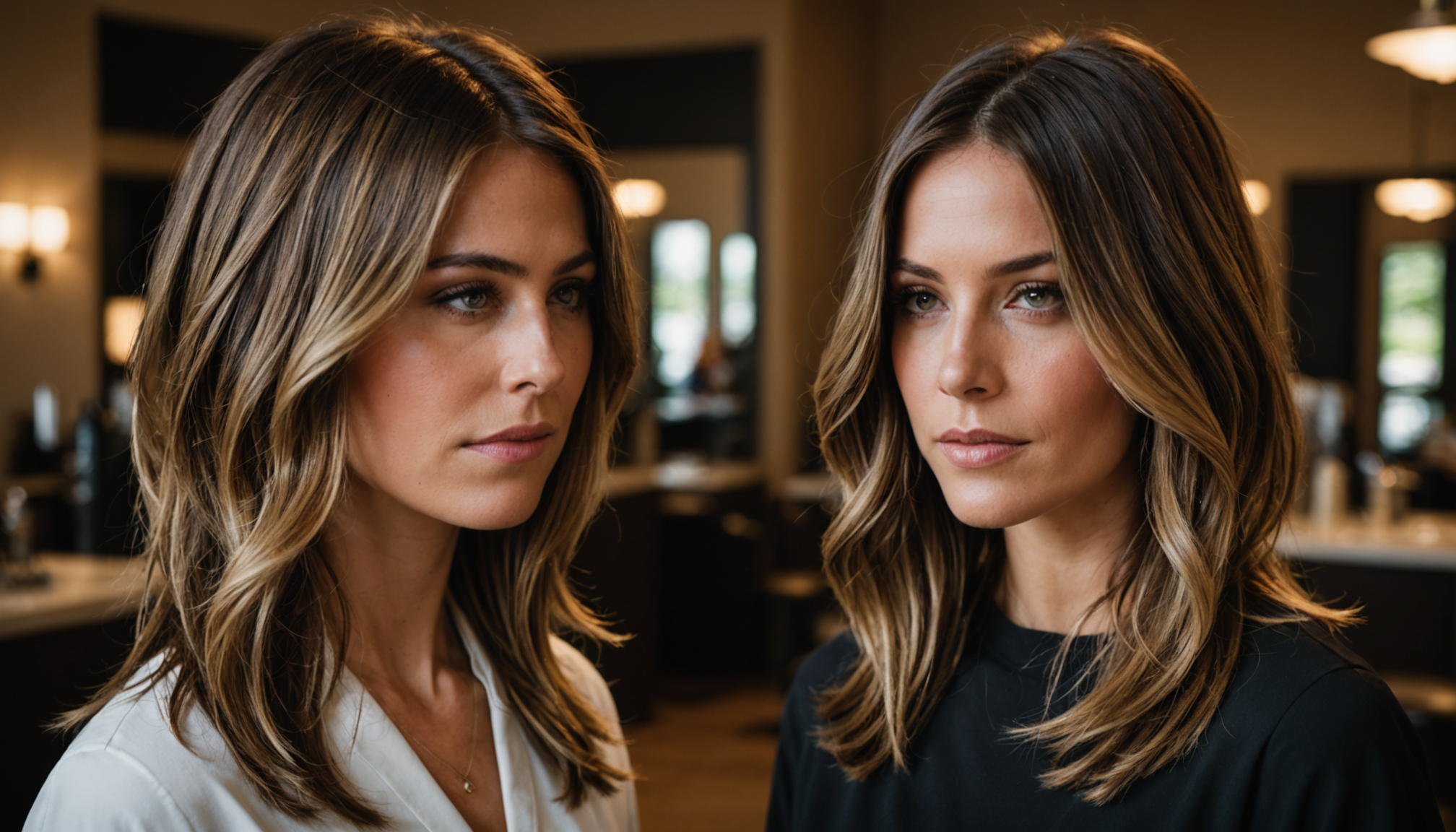
The Keratin Treatment Scottsdale Question Every Balayage Client Needs to Ask First
A single keratin treatment can shift sun-kissed balayage toward a brassy, flat, two-dimensional mess — and most clients only find out after they've already paid for both services.
TL;DR:
- The wrong keratin formula lifts color molecules from highlighted strands, turning weeks-old balayage dull or brassy within days.
- Three specific questions — about formula chemistry, application technique, and post-treatment shampoo — will tell you within minutes whether a stylist understands color-safe keratin protocols.
- Timing your keratin treatment at least two weeks after a balayage service (and using a sulfate-free maintenance routine) protects both investments simultaneously.
---
Why Most Keratin Treatments Wreck Balayage
Here's the core problem: keratin treatments work by temporarily filling and sealing the hair's cuticle using heat — typically a flat iron set between 380°F and 450°F. For natural, unprocessed hair, that process is mostly benign. For balayage or highlighted hair, it's a different story entirely.
Highlighted strands are, by definition, more porous than virgin hair. The lightening process opens the cuticle to remove pigment, and even after a gloss or toner service, those strands remain structurally more vulnerable. When a high-heat keratin application hits porous, color-treated hair, two things happen: the heat can oxidize remaining toner pigments (hello, unexpected brassiness), and the sealing action of the keratin can literally trap or displace the color molecules deposited during your last balayage appointment.
The result? You spent $350–$500 on a balayage service in Scottsdale, and two weeks later it looks like a three-month-old grow-out — because a keratin treatment at the wrong temperature, with the wrong formula, applied in the wrong sequence, reversed much of that work.
This isn't a rare edge case. It's a predictable outcome when a stylist applies a single-formula keratin protocol to every client regardless of color history. Scottsdale's intense UV environment and hard water already put color-treated hair under significant stress — if you've been keeping your balayage vibrant between appointments, you already know how much effort that requires. A careless keratin appointment undoes that work in about 45 minutes.
---
The Three Questions That Vet Any Keratin Treatment Scottsdale Stylist
Before you book, ask these three questions — out loud, directly. The quality of the answers tells you everything.
1. "Which specific keratin formula do you use on color-treated or highlighted hair?"
A knowledgeable stylist names the product. Not "we use a professional-grade treatment" — they name it. Brands like Brazilian Blowout Acai Açaí Professional Smoothing Solution, Cezanne Perfect Finish, and Olaplex-integrated keratin protocols are formulated with color integrity in mind. A stylist who gives you a vague answer about "our keratin line" either doesn't know what's in the bottle or uses a one-size-fits-all approach that puts your balayage at risk.
2. "What flat iron temperature do you use on highlighted sections versus roots?"
This is the question that separates a technically trained stylist from someone running the same protocol on every head. Highlighted sections should be ironed at a lower temperature — typically 380°F versus the 410°F–430°F often used on root areas. A stylist who gives you a single temperature for the entire head isn't adjusting for your hair's varying porosity. That's the technical gap that causes color shift.
3. "What shampoo do you recommend for the 72-hour post-treatment window, and is it safe for toned hair?"
The 72-hour period after a keratin treatment is when the bonds are still setting. Using the wrong shampoo — even a "moisturizing" one with sulfates — during this window can strip both the keratin and the toner deposited during your last color service. A stylist who knows their protocol will name a specific sulfate-free, color-safe shampoo (Pureology Hydrate, Joico Color Balance, or a comparable cruelty-free option) and will explain why generic "clarifying" rinses are off the table.
If a stylist hesitates, deflects, or answers with "don't worry, it'll be fine" — book somewhere else.
---
Formaldehyde-Free vs. Low-Formaldehyde: What Your Color Needs
This distinction matters more than most clients realize, and it's directly relevant to color-treated hair.
Traditional keratin treatments used formaldehyde or formaldehyde-releasing chemicals (like methylene glycol) to create the cross-linking bonds that smooth the cuticle. These formulas tend to produce the longest-lasting results — sometimes 4–6 months — but they're also the most aggressive on color. The heat activation of formaldehyde-based treatments can oxidize color pigments and accelerate fading in highlighted strands, sometimes visibly within two weeks of the service.
Formaldehyde-free formulas — which use alternative bonding agents like glyoxylic acid or amino acids — are gentler on color-treated hair. The trade-off is typically a shorter smoothing window (8–12 weeks versus 16–24 weeks) and slightly less dramatic frizz reduction in Scottsdale's desert humidity. For most balayage clients, that trade-off is completely worth it in 2026, when color-safe keratin formulas have improved significantly in both longevity and performance.
One concrete benchmark to use: ask if the formula's maximum formaldehyde content is under 0.2%, which is the threshold recognized by many professional safety standards for salon environments. Anything above that, on highlighted hair specifically, is a risk you're taking with your color investment.
If you've ever had to go through a color correction appointment to fix a botched service, you already know how expensive and time-consuming it is to reverse damage. A $250–$350 formaldehyde-free keratin treatment is almost always the smarter financial choice over a $150 traditional formula that costs you a $450 color correction six weeks later.
---
Keratin Treatment Scottsdale Salon Timing Around Your Color Cycle
Timing is the variable most clients ignore — and it's the one that determines whether your keratin treatment works with your color or against it.
The non-negotiable rule: never book a keratin treatment the same day as a balayage or highlight service, and wait a minimum of two weeks after color before applying keratin. Here's why: freshly deposited toner and gloss pigments need time to fully oxidize and settle into the cuticle. Applying heat-activated keratin over a same-day toner is like trying to seal a floor before the paint has cured — the keratin process interrupts the color's final settling phase and can pull pigment out of the shaft.
A practical timing sequence that works for most Scottsdale clients with color-treated hair:
1. Week 1: Balayage or highlight service with gloss/toner finish.
2. Weeks 2–3: Color settles. Use sulfate-free shampoo only.
3. Week 3 or 4: Keratin treatment appointment, on clean, color-stable hair.
4. Weeks 5–16+: Enjoy frizz-free, color-intact hair through the remainder of the treatment cycle.
Working backward from this: if your balayage appointments run every 10–14 weeks, the ideal keratin treatment window is roughly weeks 3–6 of that cycle. Book any later and you're applying keratin to hair that's already beginning to show the effects of Scottsdale's UV exposure and hard water mineral buildup — which means the keratin is fighting more porosity, and doing it less effectively.
For clients who also use hand-tied extensions — note that most keratin formulas are not compatible with extension bonds and require a separate protocol conversation with your stylist before booking.
---
What a Safe Keratin Protocol at a Scottsdale Salon Actually Looks Like
When a stylist is doing this right — specifically for color-treated hair in a keratin treatment Scottsdale environment — the appointment has a specific shape.
Before the service:
- A 10–15 minute consultation that reviews your full color history, not just your current look.
- A strand test on a highlighted section to check porosity and confirm formula compatibility.
- Confirmation that your hair hasn't been washed with a sulfate-based or clarifying shampoo within 48 hours.
During the service:
- Formula is applied in sections, with visible differentiation in technique between highlighted and non-highlighted areas.
- Flat iron temperature is confirmed and adjusted — lower on lighter, more porous strands.
- No overlap with the scalp on a first-time color-treated client.
After the service:
- A written (or clearly communicated) post-care protocol: specific shampoo name, no ponytails or hair clips for 72 hours, no ocean or pool water for at least one week.
- A recommendation to return for a gloss refresh at week 8–10 if toner begins to fade before the keratin cycle ends.
This isn't the most expensive protocol — it's simply the most thorough one. At Luxe Hair Studio, it's the only one we run.
---
Your balayage is a technical achievement. One rushed keratin appointment — with the wrong formula, the wrong temperature, the wrong timing — can dismantle weeks of skilled color work in under an hour. You now have the exact questions to prevent that from happening.
Book a complimentary color consultation at Luxe Hair Studio — schedule directly at /contact and specify that you're considering a keratin treatment alongside existing color services. We'll map out the right formula, the right timing, and the right post-care routine so both services do exactly what you paid for them to do.