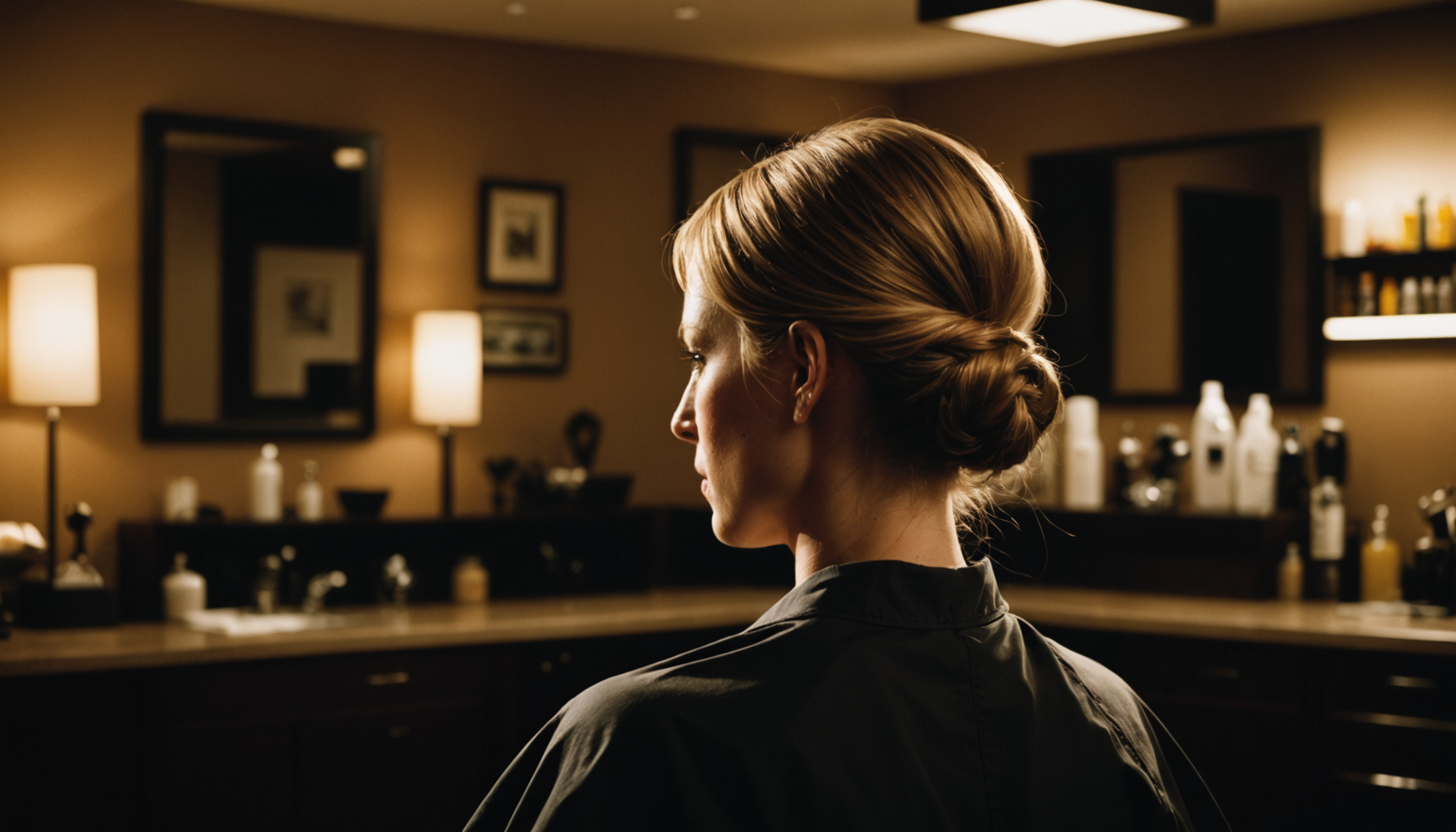
Scalp Treatment Scottsdale Salon: The Service Your Color Needs
Your $450 balayage is fading in six weeks — and your scalp is why. Most Scottsdale women investing heavily in color and extensions have no idea that an inflamed, product-saturated scalp is quietly draining the value out of every premium service they book.
TL;DR:
- An unhealthy scalp accelerates color fade and weakens extension attachment — fixing it first makes every other service perform better and last longer.
- Professional scalp treatments and product-buildup detoxes are not the same thing — knowing which one you need changes what you book and when.
- The right timing sequence — scalp treatment, then color or extensions — can add 3–5 weeks to the life of both services.
---
Why Premium Color Fades When Your Scalp Is Inflamed
Inflammation at the scalp level changes the chemistry at the root. When sebaceous glands are overactive or the scalp barrier is compromised — both common responses to Scottsdale's hard water, extreme UV, and dry desert heat — the scalp produces excess oil and shifts the pH of your hair's surface. That altered pH environment is hostile to color molecules. They deposit unevenly and exit the cuticle faster.
Here's a concrete way to understand the cost: a standard balayage & highlights appointment at a high-end Scottsdale salon runs $300–$500. If an inflamed scalp cuts the life of that color from 16 weeks down to 8–10 weeks, you're effectively paying for an extra appointment every year — a silent $300–$500 surcharge you never consented to.
Scottsdale's water is notoriously mineral-heavy, and by 2026 the Valley's average water hardness regularly registers above 200 parts per million. Those minerals deposit on the scalp and hair shaft with every wash, disrupting the scalp microbiome and creating a rough surface that won't hold color long. If your balayage is going brassy faster than it should, sustainable balayage maintenance strategies for Scottsdale's hard water address some of those environmental culprits — but the scalp piece needs its own dedicated attention.
Signs your scalp is sabotaging your color
- Color fading or going brassy within 6–8 weeks of a fresh balayage appointment
- Visible flaking or tightness at the root line, especially in Scottsdale's low-humidity winters
- Itchiness that increases in the 48–72 hours after a color service
- A greasy root appearance within 24 hours of washing
- Uneven color saturation — darker or patchier near the roots, lighter farther down
Any one of these signals that scalp health should be addressed before your next color appointment, not after.
---
Scalp Treatment Before Extensions: The Step Salons Skip
Hand-tied hair extensions are an investment. A full install of hand-tied extensions at a quality Scottsdale salon represents $1,200–$2,500 once you account for the weft hair, the installation, and the first move-up appointment. That investment relies almost entirely on one variable: secure, healthy attachment points.
Extensions attach to your natural hair at the scalp. When the scalp is inflamed, flaking, or coated in product buildup, the weft anchor is sitting on an unstable surface. Flaking disrupts the bond. Inflammation accelerates the natural shedding cycle, which means more hair releasing from the attachment points ahead of schedule. The result is a move-up appointment that comes 6 weeks early instead of the standard 8–10 weeks — and a shorter overall lifespan for the entire extension set.
A professional scalp treatment 5–7 days before your extension install creates a clean, calm surface for attachment. The scalp microbiome settles. Inflammation drops. The anchor points are stable. Most clients who add a pre-extension scalp treatment to their routine report their move-up intervals extending by at least 2 weeks — a meaningful return on a single $75–$150 appointment.
This is the step most salons skip, not because it's wrong to skip it, but because it requires scheduling discipline and an honest conversation with your client. At Luxe Hair Studio, our stylists trained at Vidal Sassoon and Aveda institutes approach extensions as a 2-step process — scalp preparation first, installation second. If you're curious why credential-based training changes how stylists approach the whole service, why a stylist's training institution matters more than experience is worth reading before you book.
---
What a Professional Scalp Treatment Scottsdale Visit Actually Includes
Not every scalp treatment is the same service. A professional scalp treatment at a specialty salon goes well beyond a conditioning mask or a shampoo with a scalp massage. Here's what a complete, professional-grade scalp treatment includes at a results-focused salon:
Assessment first
A licensed stylist examines your scalp under proper lighting — looking for buildup, dryness, redness, flaking patterns, and hair density. This 5-minute step determines which treatment protocol your scalp actually needs, rather than defaulting to a single generic formula.
Targeted treatment application
Depending on the assessment: an exfoliating enzyme treatment to dissolve mineral and product buildup, a soothing serum for inflamed or sensitized scalps, or a balancing treatment for scalps that are simultaneously dry at the crown and oily at the hairline (very common in Scottsdale's climate). At Luxe Hair Studio, every product used is cruelty-free and formulated without silicones or sulfates that would reintroduce the buildup problem. If you want to understand how to read those cruelty-free claims before you book anywhere, what cruelty-free really means at a Scottsdale salon cuts through the marketing.
Scalp massage and activation
Treatment is worked through the scalp with deliberate manual massage — not incidental pressure during a shampoo. This step increases circulation, which directly supports the growth phase of the hair cycle. Healthy circulation at the follicle level is one reason clients notice less shedding in the 4–6 weeks after a professional treatment.
Rinse and stylist recommendations
A proper rinse and a specific home-care protocol you can follow between visits. This is not an upsell conversation — it's the difference between a treatment that lasts 8 weeks and one that lasts 3.
---
Scalp Treatment vs. Product Buildup Detox: Know the Difference
These two services are often marketed interchangeably. They aren't.
Product buildup detox targets the hair shaft and scalp surface. It's mechanical and chemical removal of silicone, dry shampoo residue, styling product accumulation, and mineral deposits. It doesn't address the scalp's biological health — inflammation, microbiome balance, sebum regulation. You need it when your hair feels heavy and dull no matter how recently you washed it. In Scottsdale, a detox every 8–12 weeks is reasonable given hard water and product use.
A scalp treatment targets the scalp itself — the skin, the follicles, the sebum production rate, the inflammatory response. It addresses root causes, not surface accumulation. You need it when you're experiencing itching, sensitivity, visible scalp changes, or when your color and extensions are consistently underperforming relative to what the quality of the service should deliver.
In practice, many clients need both — in sequence. A detox removes the surface barrier. A scalp treatment then works directly on the scalp tissue without fighting through layers of buildup. Schedule them in that order, ideally in the same appointment or on consecutive visits.
| Situation | Start With |
|---|---|
| Heavy product buildup, dull hair | Detox first |
| Inflammation, sensitivity, itching | Scalp treatment first |
| Both buildup and sensitivity | Detox, then scalp treatment same visit |
| Pre-extension install | Scalp treatment 5–7 days before |
| Pre-color appointment | Scalp treatment 1 week before |
---
How to Time Scalp Treatments Around Your Color Calendar
The most common mistake: booking a scalp treatment the same day as a color service. Some scalp treatments temporarily open the cuticle or shift the scalp's pH — applying color directly after can cause unpredictable results. One week before your color appointment is the window that delivers the most benefit.
Here's a practical schedule for a client on a standard color cycle:
If you're getting balayage & highlights every 14–16 weeks:
- Week 1: Scalp treatment (detox + treatment if needed)
- Week 2: Balayage appointment — scalp is calm, cuticle is receptive, color deposits evenly
- Week 8: Mid-cycle scalp treatment to maintain balance and extend color life
- Week 14–16: Repeat the cycle
If you're on a hand-tied extension schedule with 8–10 week move-ups:
- 5–7 days before install: Scalp treatment
- Install day: Clean, calm scalp, secure attachment
- Week 5: Scalp treatment to maintain the environment around the bonds
- Week 8–10: Move-up appointment — expect the full interval, not an early return
Adding one scalp treatment per color cycle adds roughly $75–$150 to your annual spend. Against a $300–$500 color appointment or a $1,500+ extension set, that's the highest-ROI line item in your hair budget in 2026.
---
Schedule a scalp treatment at Luxe Hair Studio — Scottsdale's two-time Best Salon — before your next color or extension appointment. Book through our contact page and let us assess your scalp in a complimentary consultation so you walk into your next color service with the foundation it deserves.
<<>>